Smart Plugs to Automate Your Home
Disclosure / Affiliate Notice:
As an Amazon Associate I earn from qualifying purchases.
Some links in this article may be affiliate links that earn me a commission at no extra cost to you.
A lamp stays on all night because someone forgot to turn it off before leaving. A heater runs in an empty room for hours. Holiday lights glow long after everyone has gone to bed. None of these situations are unusual in a home filled with ordinary appliances that rely on manual switches.
A smart plug changes that relationship between the outlet and the device connected to it. Instead of the appliance deciding when it runs, the outlet itself controls the power.
Understanding that small shift explains why these devices quietly solve many everyday inconveniences.
The outlet becomes the switch
Traditional appliances rely on their built-in controls. When plugged into a wall outlet, they receive electricity continuously until someone flips a switch or unplugs them.
A smart plug inserts a controllable gate between the outlet and the appliance.
Once connected to a home network, the plug can cut or restore power based on commands, schedules, or automation rules. The appliance itself remains unchanged. A table lamp, coffee maker, fan, or humidifier simply behaves as if someone unplugged and reconnected it.
Because of this, smart plugs work best with devices that automatically resume operation when power returns. Lamps with simple toggle switches are ideal examples.
Everyday situations where automation appears
Automation tends to feel abstract until it shows up in small daily moments.
A few common patterns appear in many homes:
- Morning routines
A bedside lamp turns on at the same time every weekday morning, creating light before the alarm sounds. - Leaving the house
Several plugs switch off together when a “leaving” routine activates, ensuring that heaters or fans are not left running. - Evening lighting
Lamps turn on automatically at sunset rather than relying on someone remembering to flip multiple switches. - Holiday decorations
Lights switch on for a few hours in the evening and shut off overnight without manual timers.
None of these require changing the appliance itself. The automation happens at the outlet level.
Timers versus full automation
Many people compare smart plugs with the mechanical outlet timers that have existed for decades. Both control power automatically, but they work in different ways.
Mechanical timers
- operate on a repeating daily schedule
- must be adjusted manually on the device
- cannot respond to changing conditions
Smart plugs
- schedules can be edited from a phone
- can react to triggers like sunrise, sunset, or location
- multiple plugs can coordinate actions together
For example, sunset shifts throughout the year. A mechanical timer would gradually drift away from that natural lighting change, while a connected plug can automatically follow it.
👉 Wi-Fi smart plug outlet (affiliate link)
The device itself matters less than the idea that the outlet now participates in the home network.
Compatibility with voice assistants and hubs
Many smart plugs connect directly to Wi-Fi and operate through a companion app. Others communicate through a smart home hub or a voice assistant system.
The difference affects how automation rules are created.
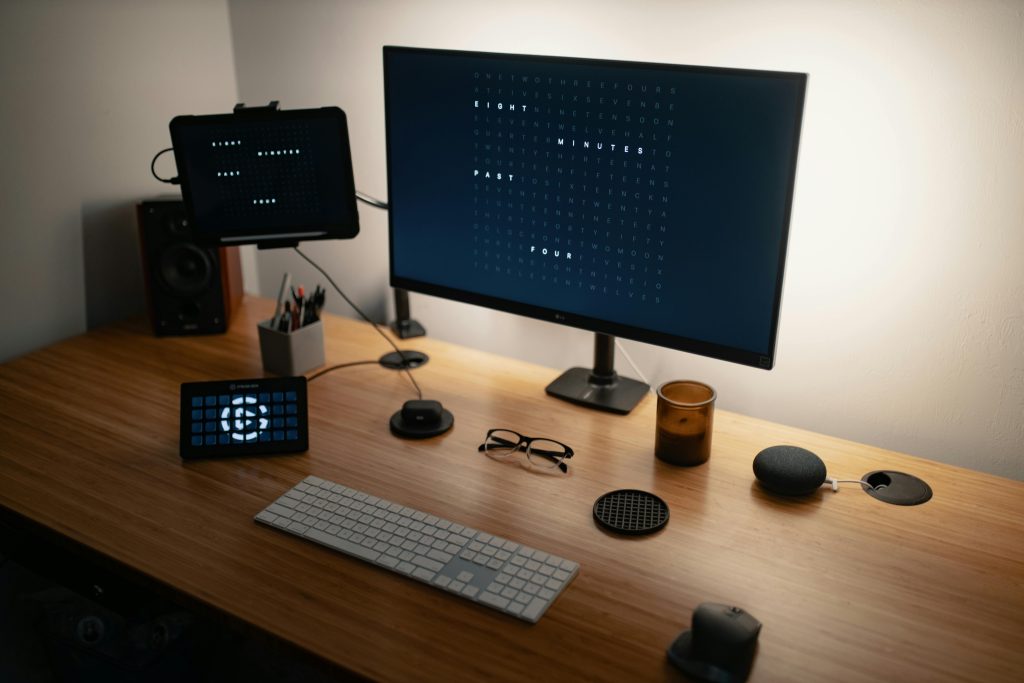
A plug connected to a larger ecosystem can participate in more complex routines:
- turning off lights when a security system arms
- activating fans when indoor temperature rises
- switching devices off when everyone leaves the house
Without that connection, the plug still works but operates mostly through simple schedules.
In practice, the choice depends on whether the home already uses a broader smart-home platform.
Electrical limits that matter
Despite the convenience, a smart plug is still an electrical device with limits. Every model specifies a maximum load it can safely control.
Typical household plugs handle:
- lamps and lighting
- fans
- small heaters
- coffee makers
- televisions and electronics
High-power appliances such as space heaters, air conditioners, or large kitchen equipment may exceed those limits. Running them through an undersized plug can cause overheating or failure.
Checking the wattage of the appliance before connecting it prevents this common mistake.
Why automation often starts with one outlet
Many people begin experimenting with home automation using a single smart plug. The investment is small, and the setup usually takes only a few minutes.
The interesting part happens afterward.
Once a lamp turns on automatically every evening or a forgotten appliance can be switched off from a phone across town, the idea of controlling power at the outlet starts to feel natural.
In many homes, the first smart plug does not remain the only one for long.
Disclosure / Affiliate Notice:
As an Amazon Associate I earn from qualifying purchases.
Some links in this article may be affiliate links that earn me a commission at no extra cost to you.